
Accurate debtor reconciliation is a fundamental part of effective receivables management. It involves comparing the balances and transactions recorded in an organisation’s accounts receivable ledger with supporting records such as customer statements, invoices, credit notes, payment receipts, remittance advices and bank records. The purpose is to confirm that every transaction has been correctly recorded and that the outstanding balance reflects what is genuinely owed.
When reconciliation is incomplete or inconsistent, businesses may pursue payments that have already been made, overlook genuine outstanding amounts or carry forward errors from one reporting period to the next. These issues can delay collections, create avoidable disputes and weaken management’s view of the organisation’s financial position.
A disciplined reconciliation process provides a reliable foundation for collection activity, customer communication, financial reporting and informed decision-making.
Why Accurate Debtor Reconciliation Matters
1. It Ensures Accurate Customer Account Balances

A reliable debtor balance begins with complete and correctly recorded transactions. Reconciliation helps confirm that invoices, payments, credit notes, adjustments and opening balances have been captured in the appropriate customer account. It also helps identify payments that have been allocated to the wrong invoice or customer.
When account balances are accurate, the collections team can approach customers with confidence, and management can distinguish genuine outstanding debt from amounts that have already been settled or adjusted.
2. It Identifies Errors and Discrepancies Early
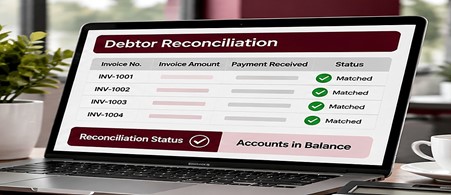
Differences between internal records and customer statements can arise for several reasons. These include unallocated receipts, duplicate invoices, missing credit notes, incorrect amounts, short payments, unsupported deductions and timing differences between transaction dates and posting dates.
Regular reconciliation brings these issues to attention before they become prolonged disputes or are carried into later reporting periods. Each variance can then be investigated against the relevant invoice, receipt, remittance advice, contract or correspondence.
3. It Improves Cash Collection and Reduces Delays

Collections are more effective when both the organisation and the customer have a clear understanding of the amount outstanding. If receipts have not been allocated or credit notes have not been reflected, customers may question statements or delay payment while the account is reviewed.
Accurate reconciliation helps remove these avoidable obstacles. It enables collection teams to issue correct statements, follow up valid overdue balances and focus their efforts on amounts that genuinely require payment.
4. It Reduces Invoice Disputes and Strengthens Customer Relationships

Customers are more likely to cooperate when account information is clear, consistent and supported by evidence. Incorrect balances, repeated requests for payments already made or failure to recognise approved credits can undermine confidence and create unnecessary tension.
A reconciled account gives both parties a sound basis for discussion. Where differences remain, the business can explain the variance, share relevant supporting documents and agree on the steps required to resolve it. This supports professional engagement while protecting the commercial relationship.
5. It Strengthens Financial Reporting and Management Decisions

Management relies on receivables information to understand cash expected from customers, monitor overdue balances and assess collection performance. If debtor records contain unresolved errors, ageing reports and portfolio summaries may not provide a dependable picture of the organisation’s exposure.
Accurate reconciliation improves the reliability of debtor ageing, outstanding balance reports, cash-flow forecasts and collection performance reviews. It also helps management identify accounts that require attention and allocate recovery resources more effectively.
6. It Supports Accountability, Internal Controls and Audit Readiness

A well-managed reconciliation process creates a clear record of what was checked, which differences were identified, what evidence was reviewed and how each item was resolved. This makes it easier to trace adjustments and understand how a customer balance was determined.
Supporting documents, approval records and a clear audit trail help reduce the risk of unauthorised adjustments, duplicated entries and unresolved balances. Reconciliation should never involve changing figures simply to make two records agree; every correction should be supported by evidence and authorised in line with the organisation’s procedures.
A Practical Process for Accurate Debtor Reconciliation
Reconciliation is most effective when it follows a consistent process and is performed at regular intervals. The frequency may depend on transaction volumes, customer risk, reporting requirements and the nature of the organisation’s credit arrangements.
1. Gather the relevant records. Obtain the accounts receivable ledger, customer statements, invoices, credit notes, receipts, remittance advices, bank records and any approved adjustments for the period being reviewed.
2. Match transactions systematically. Compare each invoice and credit entry with the corresponding customer record and payment evidence. Confirm amounts, dates, references and customer account details.
3. Identify and investigate differences. List unmatched payments, missing credits, duplicate entries, short payments and other variances. Trace each difference to its source rather than assuming it is an error or adjusting it without evidence.
4. Engage the customer where confirmation is required. Share the relevant statement or transaction details, request remittance information where necessary and agree on the facts of any unresolved difference.
5. Record approved corrections. Post only supported and authorised adjustments. Retain the documents and approvals that explain the change so the account history remains traceable.
6. Review unresolved items and report the outcome. Maintain an exception list showing the amount, reason, responsible person, next action and target resolution date. Escalate material or ageing differences through the appropriate management process.
Common Issues That Reconciliation Should Uncover
A useful reconciliation review should look beyond the closing balance and examine the transactions that make up the account. Common exceptions include:
- Payments received but not allocated to the correct customer or invoice.
- Invoices recorded more than once or posted to the wrong customer account.
- Credit notes, discounts or approved adjustments not reflected in the ledger.
- Partial payments or deductions that have not been explained or supported.
- Differences between the organisation’s records and the customer’s statement.
- Old balances carried forward without a clear transaction history or resolution status.
- Unmatched remittance advices or bank receipts that require further investigation.
How Management Can Monitor Reconciliation Effectiveness
Reconciliation should be monitored through practical indicators that show whether account differences are being identified and resolved promptly. Useful measures include:
- Unreconciled balance value: the total value of items that remain unmatched or under investigation.
- Unallocated cash: payments received but not yet assigned to the appropriate customer invoices.
- Age of unresolved differences: how long reconciliation exceptions remain open.
- Reconciliation completion: the proportion of targeted customer accounts reviewed within the agreed cycle.
- Dispute resolution time: the time taken to investigate and close account or invoice discrepancies.
These measures help management identify recurring process weaknesses, assign responsibility for resolution and improve the quality of receivables information used in collection and financial decisions.
The Takeaway
Accurate debtor reconciliation is not simply an accounting exercise. It is an essential control that protects the integrity of customer accounts, supports effective collections and gives management a reliable view of outstanding receivables.
By matching invoices, payments, credits and adjustments regularly, businesses can identify discrepancies early, reduce avoidable disputes, improve reporting and maintain stronger customer relationships. A reconciled account is easier to explain, easier to manage and better prepared for recovery action.
Need Support with Debtor Reconciliation?
Soluken Company Limited provides structured receivables-management and debt-recovery solutions to help organisations maintain accurate customer accounts, manage outstanding balances and improve recovery performance.
Our support includes billing and account reconciliation, customer engagement, structured collections, recovery monitoring and reporting. We work with organisations to improve account visibility, resolve discrepancies and strengthen control over outstanding receivables.